Tuesday, September 8, 2015

Proper Venting Is Important

When your bathroom vent is not properly terminated to the exterior, this is what you can expect. Mold found in two attics just this past week.

Wednesday, April 1, 2015

Spring Roof Check-Up

Spring Roof Check-Up

     Every spring after the snow melts it is time to check your roof. Sometimes there is a tell tale sign like a leak, but most times the damage is not as obvious.  So taking a few minutes to view your roof can prevent small problems from turning into big ones.  A good amount can be seen from the ground with a pair of binoculars.

Things to be on the look out for,

1) Broken, cracked, or missing shingles.

2)Cupping or curling shingles, all the shingles should be laying flat.

3)Dark patches, a sign granules being worn away.

4)Slots on three tab shingle that are wide, as the shingles age they shrink and these slots widen.

5)Damage from ice dams and roof raking.

6)Flashings around chimney and skylights.

As the shingles age they become brittle and shrink which can accelerate any or all of the above issues.  Average life expectancy of asphalt shingles is 20 years. If the damage is limited and the shingles fairly new repairs may be sufficient. If the damage is more widespread and the shingles are older replacement may be best. So after this winter which was extremely harsh get out there and take a look before you have water in your house.

Wednesday, January 28, 2015

Keep Your Exhaust Vents Clear!


Reminder to keep you vents clear of snow and ice during the winter season. The large amounts of snow we can receive can block vents and create a dangerous situation with exhaust fumes backing up into your home. Generally the exhaust will keep itself clear but under certain circumstances such as height of the vent and large amounts of snow over a short period of time they can cause snow to melt and refreeze as ice, completely blocking exhaust and intake pipes. So if you have direct sidewall venting be safe and make sure they are clear.


http://www.houselogic.com/news/heating-cooling/keep-furnace-vents-meters-free-snow-and-ice/#.

Tuesday, October 28, 2014

Three Things Every Homeowner Should Clean Before Winter


While there is a long list of maintenance items homeowners should be doing annually these are three that we see neglected often. The consequences, by far, outweigh the time and cost of the maintenance.

  1. Clean out your dryer vent. This is a simple chore that is best done before the cold temps and snow get here. We are much less likely to venture outside once old man winter arrives. Many fires occur every year from clogged dryer vents.
  2. Clean your gutters.  Once winter hits with freezing temps and ice and snow problems occur. Gutters and downspouts cannot drain and will freeze and back up. This will cause ice dams and dangerous conditions which can be extremely costly to repair.
  3. Clean your chimney. If you burn wood or pellets, you should have your chimney inspected and  cleaned prior to burning. Compromises in the liner can allow dangerous exhaust to enter your home. Clogged flues will not draft properly and can cause chimney fires. 

If you would like any further maintenance tips and /or any further information about our services please visit our website www.insideoutnh.com or give me a call.  Please feel free to share this email with interested colleagues or clients!

Thank You
Jamie Durand, Owner
InsideOut Home Inspection
603-548-6852
insideoutnh@gmail.com

Thursday, September 4, 2014

Money Saving Tips

A great list of some basic money saving tips for first time home buyers or long time home owners.


http://www.thesimpledollar.com/18-things-a-new-homeowner-should-do-immediately-to-save-money/

Well Water

   If you are purchasing a home with a private well, then water quality testing should be important to you and your family. Many contaminants often have no taste, odor or color. Their presence can only be determined by laboratory testing. DES recommends that prospective homebuyers test the water in a home with a private well before purchase. Water quality in wells is typically stable and testing every 3-5 years is recommended. Bacteria and nitrates are exceptions and it is recommended they be tested every year. Here are several links with beneficial information for byers and home owners with private wells.
http://des.nh.gov/organization/divisions/water/dwgb/wwb/

http://www.nelsonanalytical.com/

http://www.nhwaterwell.com/

http://wellowner.org/basics/

http://water.epa.gov/drink/info/well/index.cfm


Wednesday, September 3, 2014

Portable Generators

Having a generator ready for power outages in New England is a great idea. It can provide peace of mind and allow your family to be comfortable and safe at home during severe weather. Making sure we understand how to operate them and operate them safely is imperative.  After all keeping us safe and secure is the goal! The article below details some basic rules for operating a generator safely.


Tuesday, September 2, 2014

Cord Wood

Stacking and storing your cord wood
 
Summer is quickly coming to an end and in New England the urge to be prepared for the long winter months ahead will soon kick in. Making sure your heating wood is properly stacked and ready to burn is a growing concern for many. This article offers some general guidelines to make sure your wood is ready and you don't get left out in the cold.
 

Wednesday, November 20, 2013

Attic Insulation

  With the colder weather here for many of us, it a great time to evaluate the level of insulation we have in our attics. Your insulation's r-value will determine the possible need you might have and benefit you might gain from adding insulation. Adding insulation to the attic is generally a moderately difficult do-it-yourself (DIY) project. The good news is that, even if you're not comfortable taking on this project yourself, there are many qualified contractors who can help you get the work done. The energy star website has a wealth of information on insulation projects and improvements as well as  the amounts recommended for your geographical climate zone.


http://www.energystar.gov/index.cfm?c=home_sealing.hm_improvement_attic_insulation

Thursday, August 8, 2013

Radon In Your Home


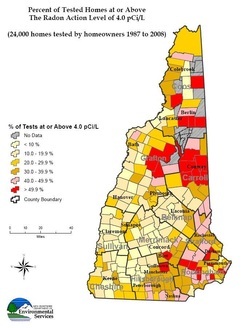
Radon can be found all over the U.S. Radon comes from the natural breakdown of uranium in soil, rock and water and gets into the air you breathe. New Hampshire is a prime location due to the amount of granite in our state. It can find its way into any type of building — homes, offices, and schools — and result in a high indoor radon level. But your greatest exposure will be in your home, where you spend most of your time. Testing is the only way to know if you and your family are at risk from radon. EPA and the Surgeon General recommend testing all homes below the third floor for radon. Testing is inexpensive and easy — it should only take a few minutes of your time. Radon levels can be brought into safe ranges with a radon mitigation system. Some radon reduction systems can reduce radon levels in your home by up to 99%. Even very high levels can be reduced to acceptable levels. For more information on radon, testing and mitigation please click the link below.
                 http://www.insideoutnh.com/radon.html

Attic Ventilation 101


Attic ventilation relies on the principle that hot air rises and cold air falls. Soffit vents allow air intake into the attic space, and ridge, gable, and roof vents allow the hot air to escape. This creates a circular flow which helps prevent hot moist air from causing mold and rot. Proper ventilation also help reduce heating and cooling costs. There is an excellent video in the link below explaining the basic principles in attic venting.

http://www.greenbuildingadvisor.com/blogs/dept/building-science/lstiburek-s-rules-venting-roofs


Thursday, July 25, 2013

Keeping your dryer vents clean, simple but important maintenance!

Something I always educate my clients on is dryer venting and proper maintenance. Lint is extremely flammable and every year there are approximately 300 fires in the U.S. attributed to dryers and dryer venting. This is an excellent article about installation and maintenance of your dryer venting.


http://www.realtor.com/home-garden/home-maintenance/fall-maintenance/dryer-vent-maintenance.aspx

Thursday, April 11, 2013

Deck Safety Checklist


     Proper deck maintenance is extremely important to the safety and longevity of your deck. Here is a checklist for your homes deck which will help your deck last and keep everyone safe. Items that should be monitored and corrected as needed, so you can enjoy the outdoors on your deck safely and worry free.
Decks, Deck Safety, Maintenance and Safety for Decks, Porches, Patios, Gazebos or other exterior wood structures. Information about Deck Builders, Porch Builders, Patio Builders, Decking Materials, Ra... »
NADRA is the premier Association representing the Decks, Docks and Railings Building and Manufacturing Industry - It's members are deck builders, building contractors, decking material manufacturers,...


.

Monday, April 8, 2013

Ungrounded Outlets


 Picture
In older homes the original wiring did not have a ground wire connected to the outlets. These ungrounded outlets are easily distinguished by their two hole / slot configuration verses the newer grounded type of outlet that has three holes / slots. Ungrounded outlets that have two holes / slots used in a home that was originally wired in this manner and has not been rewired are considered acceptable.

The problems for the owners of older homes start when grounded type outlets are substituted for the ungrounded type without the necessary rewiring that adds a ground wire to the new three prong grounded type outlet. Grounded type (three hole / slot) outlets may not be substituted for ungrounded outlets unless a ground wire is connected.
An exception to this rule is allowed by the National Electric Code, when the outlet is protected by a ground fault interrupter (GFI or GFCI).

There is a correction available for those home owners who do not want to rewire the entire house.  Replace the outlets with Ground Fault Interrupters. There are two types of GFI available, one takes the place of the regular circuit breaker in the load center. The second type that is available takes the place of the standard outlet and replaces it with a special GFI protected outlet. These are commonly used in the kitchens and bathrooms of newer homes. Most people know them for their black and red reset buttons.

A surge protector plugged into an ungrounded outlet will not operate as the manufacturer intended. When a large surge or spike hits, the surge protector uses the ground wire to take the "hit" away from the protected equipment and send it safely to ground. If the surge or spike is not sent to ground by the surge protector it will destroy the delicate electronics you were trying to protect. The warranty offered by the surge protectors manufacturer offer, is only valid if the surge protector is used in a properly grounded outlet.


Tuesday, March 26, 2013

Garage Door Safety


Automatic garage doors are required to come equipped with safety features to prevent accidental injury. One of the most important features is auto reverse. The door opener should sense an obstruction and stop and reverse. This prevents rhe door from exerting downward pressure and crushing anything trapped under it. As home inspectors we test these functions, and as a home owner you should do the same. For more information on the safety features and methods for testing please click the link.


http://www.washingtonpost.com/wp-dyn/articles/A56868-2004May26.html

Thursday, March 7, 2013

Plumbing Traps, Knowing Right From Wrong

 Why we want P-traps vs. the old style S-traps.

 An S-trap is obsolete and illegal because as the water leaves it, it can cause a condition called back syphonage, it pulls all the water out of the trap, leaving a dry trap. Dry traps let sewer gases flow back up through the fixture into the house. P-traps are designed to prevent syphonage. The trap retains a small amount of water after the fixture's use. This water in the trap creates a seal that prevents sewer gases from passing from the drain pipes back into the home.


 http://inspectapedia.com/plumbing/Plumbing_Fixture_Traps.htm

Monday, March 4, 2013

Smoke Detector Locations

Smoke detectors save lives. Do you know where they should be in your house? It is required of new construction to have detectors in every bedroom and at least one on each floor including basement. New homes require the detectors to be hard wired and interconnected, which trigers them to all go off when one detects smoke. I also recommend having one in the garage. If your home is older the detectors are not required to be hard wired, but it is a very good idea to install them in all the requred locations.http://www.nfpa.org/itemDetail.asp?categoryID=1648&itemID=39907&URL=Safety%20Information/For%20consumers/Fire%20&%20safety%20equipment/Smoke%20alarms/Installation%20and%20maintenance%20tips

Thursday, February 14, 2013


Picture
The Importance of Proper Bathroom Venting

   Lack of proper venting in bathrooms is a very common occurence. Simply not having any venting or improper vent terminantion. Proper venting is critical to removing moisture from your bathrooms. This moisture can cause many issues, the biggest issue being mold. Mold in the bathroom on walls and ceilings, and mold in the attic if not properly terminated to the exterior. Most of us will not travel to our attics too often and the ongoing effects could be creating serious damage and health implications.
http://inspectapedia.com/interiors/Bathroom_Ventilation.htm

Inspecting Your Roof

Picture

Inspect Your Roof and Flashings
Checking annually is a good idea but even better is to check in the fall before winter weather and again in the spring after the winter. In New England we can have extreme weather events throughout the year and during these events are when most roofs can suffer damage beyond normal wear and tear. Again the goal being to catch and repair the situation before it causes other major issues.

http://www.doityourself.com/stry/inspecting-your-roof#b