Tuesday, October 28, 2014

Three Things Every Homeowner Should Clean Before Winter


While there is a long list of maintenance items homeowners should be doing annually these are three that we see neglected often. The consequences, by far, outweigh the time and cost of the maintenance.

  1. Clean out your dryer vent. This is a simple chore that is best done before the cold temps and snow get here. We are much less likely to venture outside once old man winter arrives. Many fires occur every year from clogged dryer vents.
  2. Clean your gutters.  Once winter hits with freezing temps and ice and snow problems occur. Gutters and downspouts cannot drain and will freeze and back up. This will cause ice dams and dangerous conditions which can be extremely costly to repair.
  3. Clean your chimney. If you burn wood or pellets, you should have your chimney inspected and  cleaned prior to burning. Compromises in the liner can allow dangerous exhaust to enter your home. Clogged flues will not draft properly and can cause chimney fires. 

If you would like any further maintenance tips and /or any further information about our services please visit our website www.insideoutnh.com or give me a call.  Please feel free to share this email with interested colleagues or clients!

Thank You
Jamie Durand, Owner
InsideOut Home Inspection
603-548-6852
insideoutnh@gmail.com

Thursday, September 4, 2014

Money Saving Tips

A great list of some basic money saving tips for first time home buyers or long time home owners.


http://www.thesimpledollar.com/18-things-a-new-homeowner-should-do-immediately-to-save-money/

Well Water

   If you are purchasing a home with a private well, then water quality testing should be important to you and your family. Many contaminants often have no taste, odor or color. Their presence can only be determined by laboratory testing. DES recommends that prospective homebuyers test the water in a home with a private well before purchase. Water quality in wells is typically stable and testing every 3-5 years is recommended. Bacteria and nitrates are exceptions and it is recommended they be tested every year. Here are several links with beneficial information for byers and home owners with private wells.
http://des.nh.gov/organization/divisions/water/dwgb/wwb/

http://www.nelsonanalytical.com/

http://www.nhwaterwell.com/

http://wellowner.org/basics/

http://water.epa.gov/drink/info/well/index.cfm


Wednesday, September 3, 2014

Portable Generators

Having a generator ready for power outages in New England is a great idea. It can provide peace of mind and allow your family to be comfortable and safe at home during severe weather. Making sure we understand how to operate them and operate them safely is imperative.  After all keeping us safe and secure is the goal! The article below details some basic rules for operating a generator safely.


Tuesday, September 2, 2014

Cord Wood

Stacking and storing your cord wood
 
Summer is quickly coming to an end and in New England the urge to be prepared for the long winter months ahead will soon kick in. Making sure your heating wood is properly stacked and ready to burn is a growing concern for many. This article offers some general guidelines to make sure your wood is ready and you don't get left out in the cold.
 

Wednesday, November 20, 2013

Attic Insulation

  With the colder weather here for many of us, it a great time to evaluate the level of insulation we have in our attics. Your insulation's r-value will determine the possible need you might have and benefit you might gain from adding insulation. Adding insulation to the attic is generally a moderately difficult do-it-yourself (DIY) project. The good news is that, even if you're not comfortable taking on this project yourself, there are many qualified contractors who can help you get the work done. The energy star website has a wealth of information on insulation projects and improvements as well as  the amounts recommended for your geographical climate zone.


http://www.energystar.gov/index.cfm?c=home_sealing.hm_improvement_attic_insulation

Thursday, August 8, 2013

Radon In Your Home


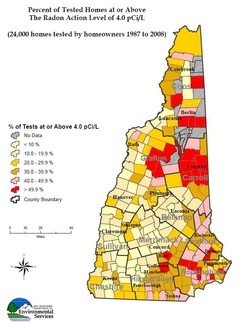
Radon can be found all over the U.S. Radon comes from the natural breakdown of uranium in soil, rock and water and gets into the air you breathe. New Hampshire is a prime location due to the amount of granite in our state. It can find its way into any type of building — homes, offices, and schools — and result in a high indoor radon level. But your greatest exposure will be in your home, where you spend most of your time. Testing is the only way to know if you and your family are at risk from radon. EPA and the Surgeon General recommend testing all homes below the third floor for radon. Testing is inexpensive and easy — it should only take a few minutes of your time. Radon levels can be brought into safe ranges with a radon mitigation system. Some radon reduction systems can reduce radon levels in your home by up to 99%. Even very high levels can be reduced to acceptable levels. For more information on radon, testing and mitigation please click the link below.
                 http://www.insideoutnh.com/radon.html